You hit good shots and still lose the point.

Most of those points are lost on the choice before the swing: attack or keep it in, middle or corner, stay back or move up. The Next Ball Playbook shows you what to do with every ball, so the game you have today wins more matches.

  • A complete playbook built around real match decisions
  • 36 animated court videos you can watch on your phone
  • One-page decision tools and cheat sheets
  • A 30-day plan to take it into your matches
Instant access Yours for life Secure checkout by Hotmart Playbook and videos in English

You have had every one of these thoughts on court.

  • I hit it so well in training. Why does it fall apart in the match?
  • They don't even hit hard, and I still lose.
  • Attack or keep it in? I only know after the ball is gone.
  • Both of them are at the net and I just want the point to end.
  • My partner and I keep ending up in the same place.
  • I play three times a week and I'm not getting better.

Each of these comes from a choice you made before the swing, and most of those choices were made by habit. The playbook gives you something better to choose with.

Written for club players, men and women, from the first year of padel up to a strong club level. Leagues, Playtomic matches, local tournaments.

More hitting will not fix a decision you never trained.

A lesson fixes how you hit the ball. A basket drill feeds you the same ball every time, so you never practise choosing. In a match no ball repeats, and you have a second or two to pick between attacking, containing and surviving.

With no rule to pick from, you do what you always do. You swing at the ball that arrives, you look at what happened afterwards, and you promise yourself to concentrate more next time. Concentrating harder gives you no rule, so the same habits come back in the next match.

The players who beat you without hitting hard know where the next ball has to go before they hit this one.

You lose 6-4, 6-4 to a pair you should beat. In the car you replay four or five points, and they all end the same way: a ball you tried to win when it only had to stay in play.

Technique takes years to change. Decisions can change in your next match.

You can keep the forehand, the volley and the bandeja you have and still win more points, because each ball starts going to the right place, at the right height, at the right time.

Decide first.
Then hit.

Most club players hit the ball that arrives. They see it, they react, they swing, and only then they look at what happened. Good players already know what they want the next ball to be before they hit this one: a weak reply, a lob, a volley from the opponent's feet.

The 3 Next Ball Questions

  1. 1

    What did my last ball create?

    An easy ball for them, a hard one, or something in between? Be honest. Your next move depends on it.

  2. 2

    What can they do now, and where is the empty space?

    Can they attack, or only contain? Which part of the court did they just leave open?

  3. 3

    Where is my next ball going?

    Attack the space, contain, or survive. You decide it now, before the ball comes.

Ask them after every shot for one full match. It feels slow. By the third match it feels normal.

Open the playbook at the page that fixes it.

Real pages and real frames from the lessons. Every video has a button in the playbook that opens it.

You never know whether to attack or keep it in.

Give every ball a colour before you hit it. Green, you attack: the ball has rebound, it sits in your hand and you are close to them. Yellow, you contain and build. Red, you survive.

The colour comes from the ball, not from the score or from how much you want the point. That is how you stop going for balls you cannot finish, which Module 3 calls the most expensive decision in padel.

Module 3 · The traffic light
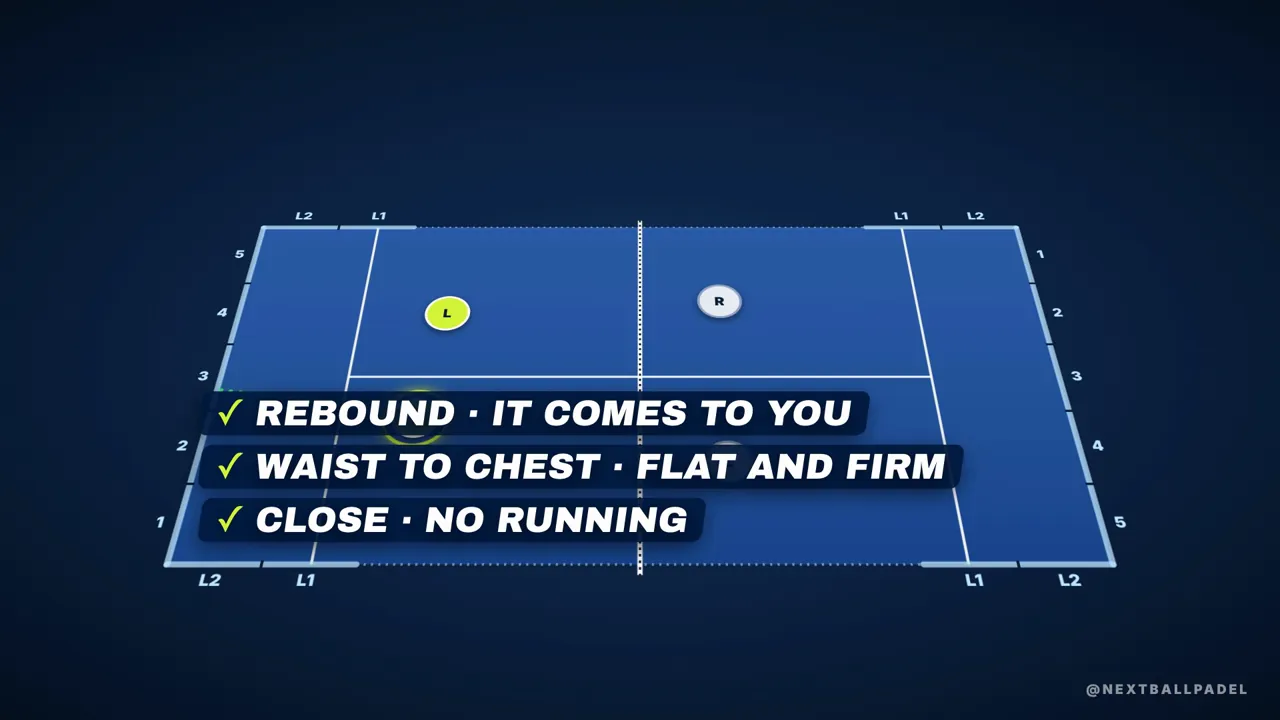
Frame from the video When to Attack: a green ball has rebound, sits between waist and chest height and is close to youVideo: When to Attack

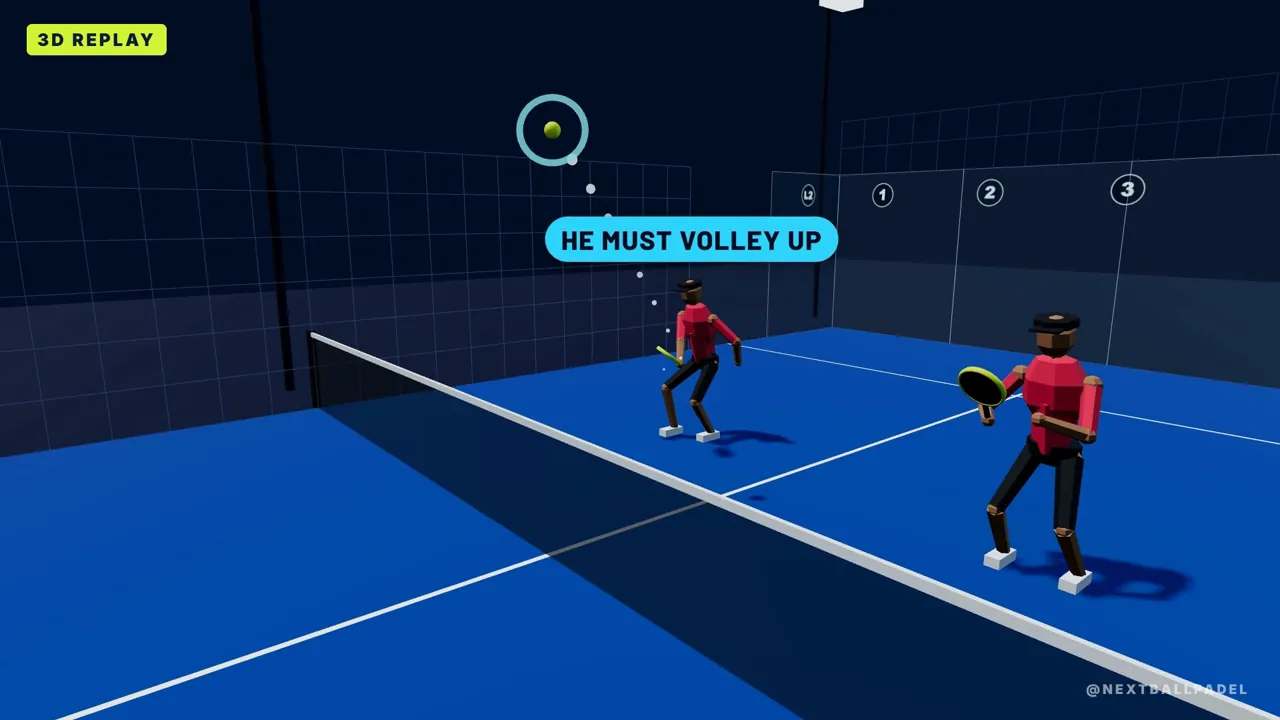
Both opponents are at the net and you are stuck at the back.

Send the safe ball: low and flat, down the middle, aimed at the backhand of their right-side player and away from the left-side player's forehand. Keep it about 30 cm over the net.

A ball that low has to be volleyed upwards, so they cannot hit down on it. Their pair loses its attack and you stay in the point while you work your way back toward the net.

Module 3 · Neutralize: Give Them Nothing

3D replay from the video Both at the Net, You at the Back: a low ball forces the opponent to volley upVideo: Both at the Net, You at the Back

You aim at the player in front of you, and he always gets it back.

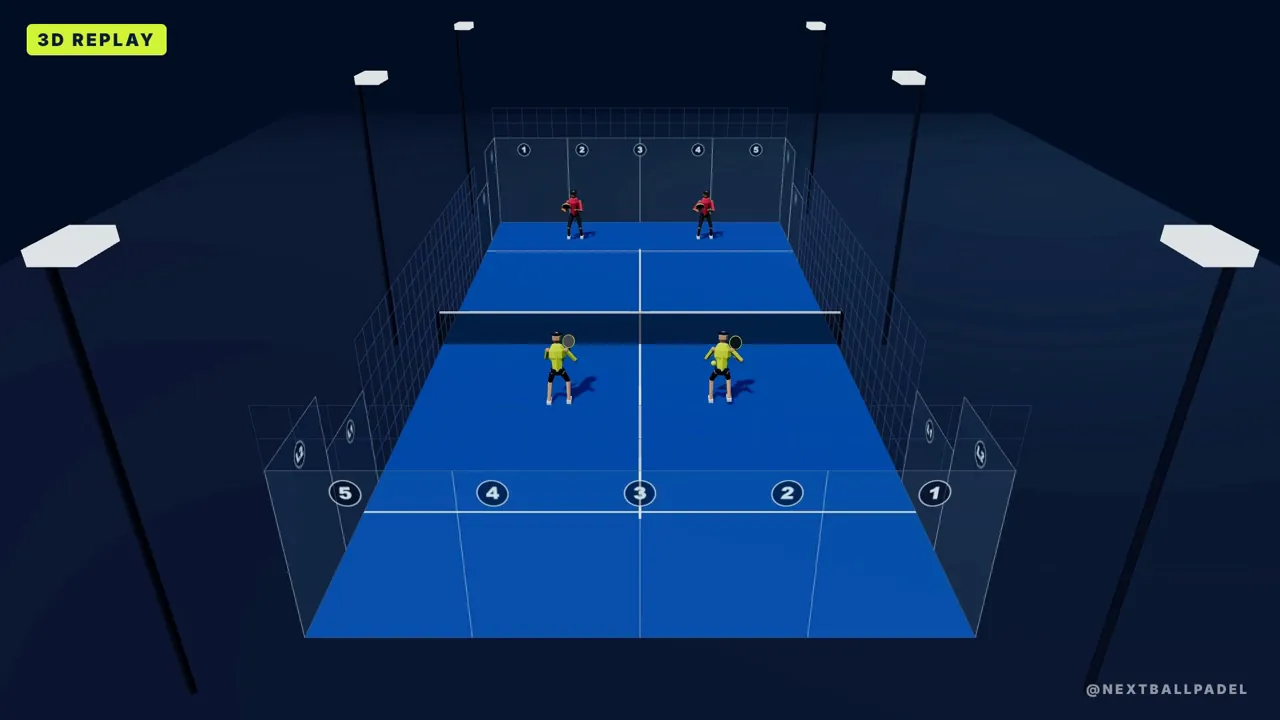
Learn the back of the court as five wall zones and play to the empty space. When you are unsure, play walls 1, 3 and 5: the two corners and the middle.

A ball down the middle leaves two players with one ball, and a ball in the corner stays trapped against the glass. Either way they answer from a worse position than the one you hit from.

Module 4 · Walls 1 to 5

3D replay from the video Walls 1 to 5, showing the five wall zones on a padel courtVideo: Walls 1 to 5

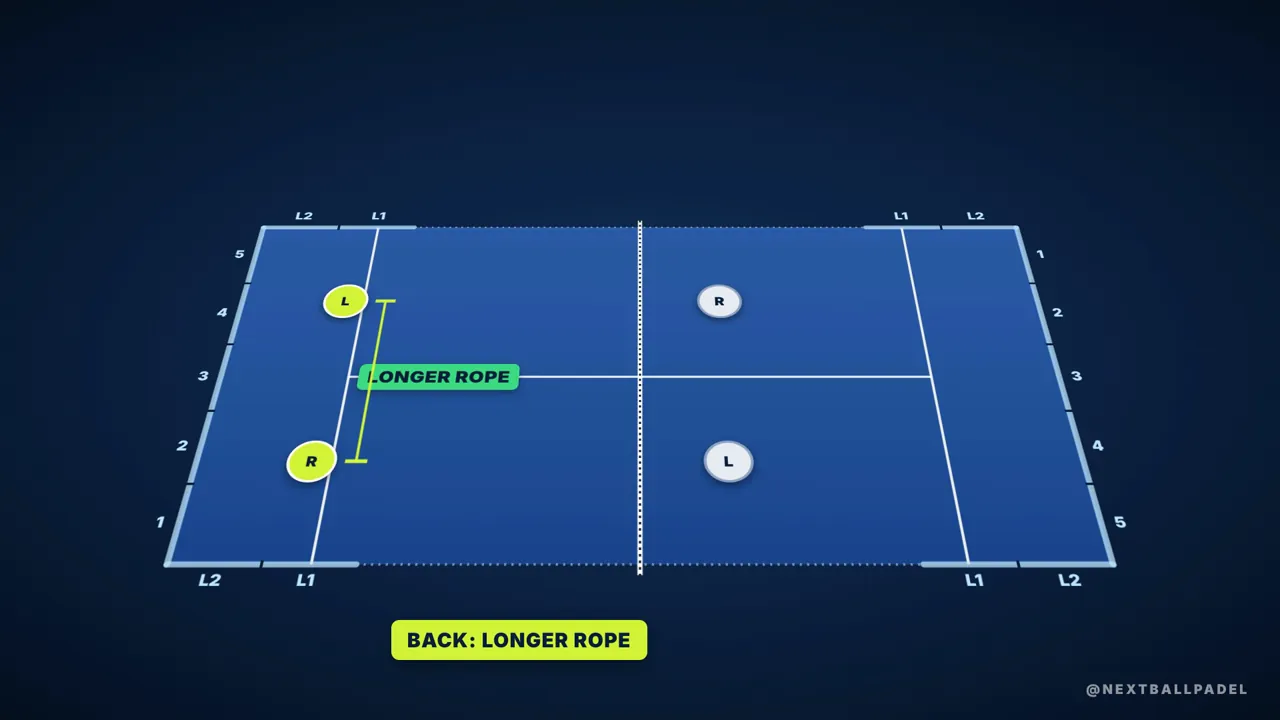
You and your partner keep standing in the same place.

Move as one pair, as if a rope tied you together. The default is about 3 to 3.5 m from the net, and one step closer when your partner's volley has pinned an opponent in the corner.

Module 7 puts it this way: two good players who move apart lose to two average players who move together. When you move as one, the gaps close and the opponents run out of free space to hit into.

Module 7 · Playing as One

Frame from the video Move as One: the longer rope when the pair is at the backVideo: Move as One

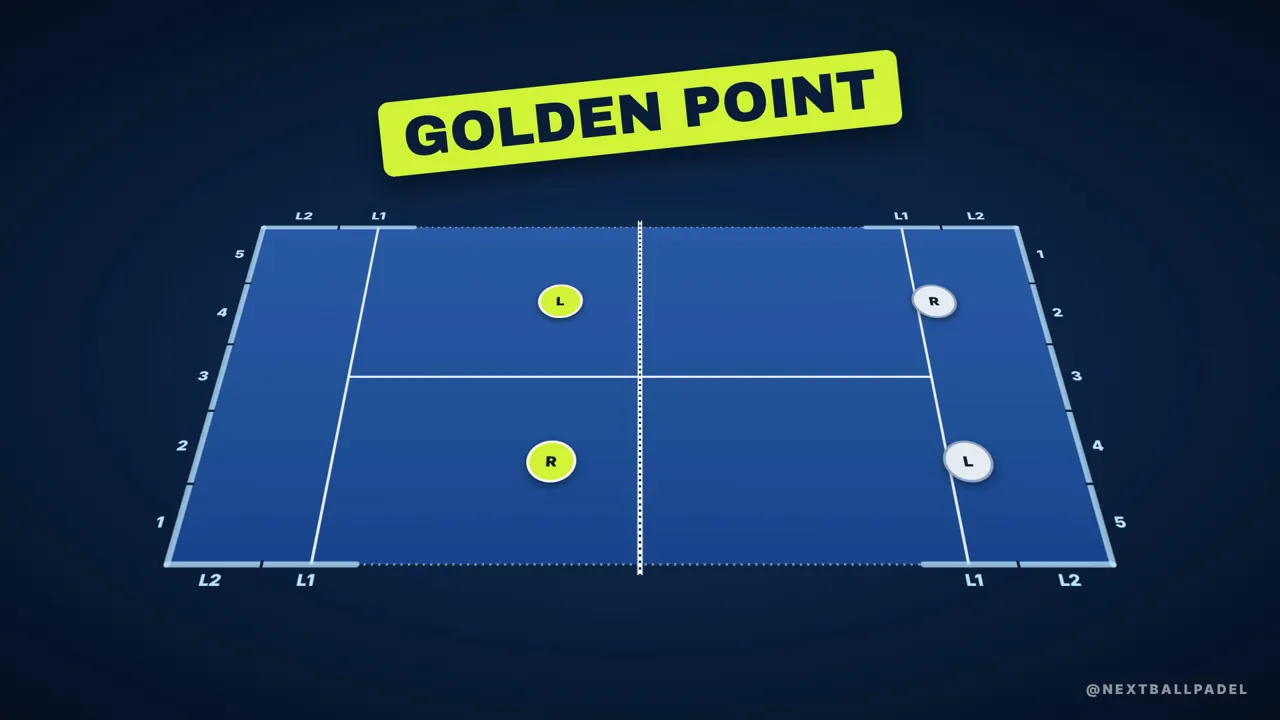
At 30-30 or the golden point, you go for too much.

Play the score. At 30-30 and at the golden point, keep margin from the walls, the fence and the net, play through the middle, and go only for a ball that really sits up. At 0-40, hit low balls until the chance appears.

The same ball deserves a different amount of risk depending on the score, because a mistake at 30-30 costs more than a mistake at 40-0.

Module 9 · Play the Score

Frame from the video Play the Score: the golden point on an animated courtVideo: Play the Score

10 modules, 36 animated videos and one page of rules for each module.

Get the Playbook · $49

10 modules. Each one answers a question you ask on court.

Short on purpose. Read one before match day, pick one rule, play with it.

  1. 1

    The Next Ball Mindset

    How do I stop playing ball by ball?

  2. 2

    Read the Ball

    Is this ball easy, medium or hard?

  3. 3

    Attack or Defend

    Do I go for it or keep it in play?

  4. 4

    Where to Hit

    Where does my best ball go?

  5. 5

    Serve & Return

    How do I start the point in control?

  6. 6

    From Defense to the Net

    They own the net. How do I take it back?

  7. 7

    Playing as One

    Where are my partner and I supposed to be?

  8. 8

    Game Plan

    How do I beat these two opponents?

  9. 9

    Score & Mind

    What changes at 30-30, 0-40 or 0-4?

  10. 10

    Cheat Sheets & 30-Day Plan

    How do I take all of this to the court?

Watch one full lesson before you decide.

Both at the Net, You at the Back. Both opponents are at the net and you have a hard ball at the back. In a minute and a quarter on an animated court you see where to play it, how high, and what that does to their volley.

9 module summaries, 1 to 3 min 27 situation videos, 1 to 2 min Narrated in English, with on-screen notes

More pages and frames from inside.

Tap any one to see it bigger.

Pages from the playbook

Frames from the videos

Use it in tonight's match. Measure it in 30 days.

Day 0: instant access

Right after payment you get an email with your login. Start Here takes ten minutes to read. Then page 9 gives you three rules for your next match: say easy, medium or hard before every ball, play 8 of 10 balls with control, and hit then go back to your spot.

You get the full playbook as a PDF, all 9 module summary videos and the 27 situation videos on an animated court.

Days 1 to 30: the 30-day plan

Module 10 turns the playbook into four weeks of matches, one decision at a time. Fill in the Decision Scorecard on day 1 and again on day 30, and the match sheet after each game, so you can see what changed.

Built by a former pro player with more than 24 years in padel.

The Next Ball Playbook was built by a padel coach who played professionally, has been on court since 2002 and competed in Argentina and Uruguay. For the last 16 years he has coached club players in Brazil and trained new coaches.

Every rule in these pages comes from what he teaches on court every week, to players of every level. If it doesn't win points in a club match, it isn't in the playbook.

"Rushing is your worst enemy. Read first, then hit."

Everything you need to decide better, starting with your next match.

The Next Ball Playbook

Decisions for club players

  • The complete Next Ball PlaybookPDF in English, for phone, tablet or print
  • 9 module summary videos1 to 3 minutes each, on an animated court
  • 27 situation videosNarrated in English, each decision moving on an animated court
  • Decision tools and cheat sheetsOne page per module
  • Your first match and the Decision ScorecardThree rules for tonight, and a way to compare day 1 with day 30
  • The 30-day match planWith a match sheet to track your decisions
  • Lifetime accessCome back before a tournament or with a new partner
$49

One payment. Yours for life.

Get instant access

Secure checkout by Hotmart. Pay by card or other local options, in your currency.

Before you buy

What level do I need to be?

It is written for club players, from the first year of padel up to a strong club level. If you play leagues, Playtomic matches or local tournaments and you want to move up, it's for you. Beginners get the right habits early, and stronger players find the decisions that cost them points.

Is it a book or a video course?

Both. The playbook is a PDF with the rules, diagrams, decision tools and situation cards, and you can read it on your phone or print it. The videos show each idea moving on an animated court. Every video has a button in the PDF that opens the lesson in your members area, so you can read and watch in the same place.

What language is it in?

English. The playbook (PDF) and all 36 videos are in English, and the videos are narrated in English with on-screen notes.

How do I get access after I pay?

Right after payment you receive an email from Hotmart with your login to the members area. The PDF and the videos are there, and you can open them on your phone, tablet or computer.

How soon will I notice a difference?

The three rules on page 9 are made for your next match. The 3 Next Ball Questions feel slow in the first match and normal by the third. The 30-day plan then takes you through four weeks of matches, and the Decision Scorecard shows you what changed between day 1 and day 30.

Does it work for both the right and the left side?

Yes. The decisions are explained for both sides of the court, and the situation cards say when something changes depending on the side you play.

Will this fix my technique?

The playbook covers the choices around your technique: which ball to attack, where to send it, when to keep it in play and where to stand. Keep your coach for the swing. The choices are where most club players lose their points.

How long do I have access?

Your access doesn't expire. Come back to it before a tournament, or when you start playing with a new partner.

Is the payment secure?

Checkout is handled by Hotmart, a payment platform used by creators all over the world. We never see your card details.

Next ball.

Your next match is the first chance to use it.

Get the Playbook for $49
The Next Ball Playbook$49 · Instant access
Get it